
Whoa!
I opened a new tab last week and saw my wallet connected to a dApp I didn’t recognize. Seriously?
My heart did a tiny flip. Hmm… something felt off about the UI, the permissions, the gas estimates all looked a little too casual.
Initially I thought it was just me being paranoid, but then I started tracing the session, checking the origin, and realized that sloppy UX can be a security vector, not just an annoyance.
On one hand these extensions are incredibly convenient, though actually they also concentrate risk in a way that a hardware wallet at least partly mitigates, and that’s a trade-off most users don’t fully consider.
Okay, so check this out—browser-extension wallets sit at the intersection of convenience and attack surface. Wow!
They inject scripts into web pages, hold private keys (encrypted locally), and mediate transactions between you and a sprawling ecosystem of dApps.
That means phishing, malicious contracts, clipboard hijackers, and even UI spoofing are not theoretical—they’re practical, everyday threats.
My instinct said “lock it down,” but my brain also knew that overly aggressive security kills usability, so the trick is to design for both.
Here’s the thing: small design choices—where the extension asks for permission, how it displays origin info, whether it auto-connects—can make a user 10x safer without making life miserable.
I’ll be honest, I’m biased toward wallets that think like engineers and product people at once.
Rabby is one of those that tries to balance them. Really?
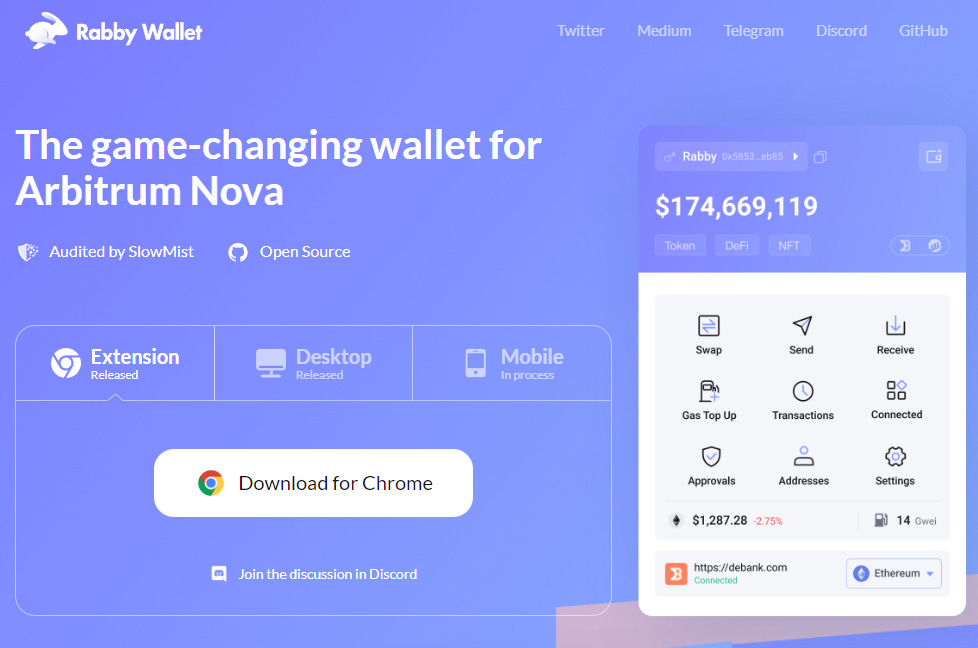
At its core Rabby provides granular connection controls, transaction previews that decode contract calls, and network-aware warnings that flag suspicious gas or token approvals.
Initially I thought those features were niceties, but after seeing an approval exploit on a testnet, I realized they’d prevented a real loss for someone in my circle.
So yeah, those UI details matter; they can be the difference between a “whoops” and a “wallet drained.”
Security isn’t just feature checklists. Hmm… it’s also cultural.
Teams that treat phishing reports like gold and ship small UX improvements fast often outperform “security-first” teams that are slow and opaque.
Why? Because users who understand their tools actually use safer behaviors; confusing warnings get ignored and then become noise, and noise kills trust.
On that note, Rabby tries to be opinionated about defaults—deny first, ask smartly—and offer plain-English explanations that help users learn rather than shout at them.
I’m not 100% sure every user will read those, but incremental education beats none at all.
Threat modeling for a browser-extension wallet is simple in theory, messy in practice.
There are four big classes I watch: phishing sites that mimic flows, rogue dApps asking for unlimited approvals, clipboard and clipboard-swap attacks, and extension isolation failures.
On paper you can mitigate each—origin binding, approval caps, clipboard monitoring, and process isolation—but deployment realities complicate things; browsers evolve, extensions need permissions, and users want one-click approvals.
On one hand automated heuristics can block obvious junk, though actually heuristics create false positives that annoy users and then users disable them—so you gotta be surgical.
That tension is very very real.
From a hands-on standpoint here’s what I do and recommend.
Short list first: isolate funds, minimize approvals, verify origins, and use layered authentication.
Then add process: test transactions on small amounts, check contract calls, and keep a watch-only or cold wallet for bulk storage.
I’m biased toward using a dedicated browser profile for DeFi, with only the wallet installed, because it reduces cross-site contamination.
Also, if a transaction pops up with weird calldata or an approval that seems too broad, pause—go offline, copy the calldata to a trusted explorer and inspect it—don’t just click through.
Practical tips and a recommendation
Start with the basics: keep your seed offline, use a passphrase if supported, and adopt a mental model where your browser wallet is for daily ops and not long-term savings. Whoa!
Enable transaction previews and never approve unlimited allowances unless you absolutely trust the contract for a long-term interaction.
Rabby’s UI shows decoded call data and warns on unlimited approvals, which is why I point folks to it when they ask for a pragmatic, browser-extension option.
If you want to try it out, here’s a place to get the installer with sensible defaults and clear docs: rabby wallet download.
I’m mentioning that single link because I think getting the installer from a trustworthy source is step one; verify the publisher, check hashes if you can, and treat the initial install as a security event.
There’s somethin’ about community vigilance that matters too.
When a wallet team listens and iterates, the product becomes safer for everyone; reports should be easy to file, and response times should be fast.
I’ve reported UI quirks and gotten fixes in weeks, not months, and that responsiveness saved people money downstream.
On the flip side, silence from a team makes users invent their own fixes, which are often worse, and worse still if those “fixes” are scripts or forks from unverified sources.
So take community signals seriously; they inform your threat model.
Common questions
Can a browser-extension wallet be as safe as a hardware wallet?
Short answer: not exactly. Long answer: for everyday use, a well-designed extension combined with good habits gets you far, but for cold storage of large sums a hardware wallet still beats extensions on isolation. My instinct says use both—extensions for agility, hardware for savings.
What are the quickest wins to reduce risk?
Use site-specific connections (don’t allow global auto-connect), cap token approvals, test transactions with tiny amounts, and keep your main funds offline. Also, consider a dedicated browser profile or a separate machine for high-value transfers. It’s not rocket science, but it helps.
How do I spot a malicious transaction?
Look for unusual method names, large token allowances, or destinations that don’t match the dApp you’re using. If the calldata decodes to a transfer or approval you didn’t expect, pause. When in doubt, ask in a trusted community channel or check with a block explorer.